
 ,
Kirpal Agyemang Ofosu,
Daniel Dzorkpe Gamenyah,
Elizabeth Norkor Nartey,
Jacob Kporku,
Kenneth Korfeator,
Linda Bediako,
Maxwell Darko Asante,
Boampong Edward,
Francisca Amoah Owusu
,
Kirpal Agyemang Ofosu,
Daniel Dzorkpe Gamenyah,
Elizabeth Norkor Nartey,
Jacob Kporku,
Kenneth Korfeator,
Linda Bediako,
Maxwell Darko Asante,
Boampong Edward,
Francisca Amoah Owusu
The purpose of this study was to assess how two bio-stimulants, Amino and Agriful, affect the growth and yield of rice (Oryza sativa L.). Bio-stimulants are increasingly recognized for their ability to boost plant performance in a sustainable way, and this study set out to examine their specific contributions under controlled conditions. To achieve this, pot experiments were used to clearly isolate and measure their effects. Two rice varieties, LEGON-1 and CRI-AMANKWATIA, were selected for the trials. The experiment involved applying Amino and Agriful at different concentrations, along with a control treatment that received no bio-stimulant. Key growth indicators such as plant height, leaf area, and biomass accumulation were monitored at different stages of development. Results showed that Amino significantly enhanced vegetative growth. Plants treated with Amino exhibited greater height and larger leaf area, which supported better photosynthetic activity and higher biomass production. In contrast, Agriful had a stronger influence on yield-related traits, promoting longer panicles, heavier grains, and higher overall grain yield. Soil tests conducted before and after the experiment indicated that both bio-stimulants improved soil conditions, particularly by increasing nutrient availability and stimulating microbial activity. Overall, the study demonstrates that incorporating bio-stimulants like Amino and Agriful into rice production can enhance growth and yield in a sustainable manner. Although both products were beneficial, their differing strengths, Amino favoring vegetative growth and Agriful enhancing yield components—underline the need to match bio-stimulant choice with specific agronomic objectives.
| Published in | Journal of Plant Sciences (Volume 14, Issue 2) |
| DOI | 10.11648/j.jps.20261402.11 |
| Page(s) | 68-78 |
| Creative Commons |
This is an Open Access article, distributed under the terms of the Creative Commons Attribution 4.0 International License (http://creativecommons.org/licenses/by/4.0/), which permits unrestricted use, distribution and reproduction in any medium or format, provided the original work is properly cited. |
| Copyright |
Copyright © The Author(s), 2026. Published by Science Publishing Group |
Oryza Sativa L, Bio Stimulant, Amino and Agriful, Environmental, Microbial, Plant growth, Productivity
Parameter | Method Used | Value | Unit |
|---|---|---|---|
Soil pH (1:2.5 H₂O) | [25] . Jackson (1973) | 5.8 | – |
Electrical Conductivity | [26] Bower & Wilcox (1965) | 0.15 | dS/m |
Organic Carbon | [27] Walkley (1934) | 1.25 | % |
Available Nitrogen | [28] Subbiah & Asija (1956) | 120 | mg/kg |
Available Phosphorus | [29] Olsen et al. (1954) | 15.2 | mg/kg |
Available Potassium | [30] Hanway & Heidel (1952) | 140 | mg/kg |
Available Sulphur | [31] Williams & Steinbergs (1969) | 10.5 | mg/kg |
Available Boron | [32] Berger & Troug (1993) | 0.45 | mg/kg |
Treatment | Amankwatia | Legon - 1 | ||||||
|---|---|---|---|---|---|---|---|---|
PH4wk | PH6wk | PH8wk | PH10wk | PH4wk | PH6wk | PH8wk | PH10wk | |
Ag(0) | 34.5 ab | 44.8 b | 56.0 b | 65.2 c | 28.1 b | 40.9 a | 52.8 | 59.4 |
Ag(50) | 36.6 a | 49.7 b | 62.8 ab | 73.2 bc | 36.6 ab | 52.3 a | 65.2 | 72.5 |
Ag(100) | 34.3 ab | 51.3 ab | 66.9 ab | 74.3 bc | 37.9 a | 53.3 a | 65.2 | 74.9 |
Am(0) | 26.7 b | 44.6 b | 54.4 b | 64.3 c | 33.8 ab | 46.2 a | 60.8 | 48.9 |
Am(50) | 36.7 a | 57.6 a | 73.2 a | 83.0 ab | 33.3 ab | 45.1 a | 62.2 | 69.2 |
Am(100) | 38.8 a | 49.0 b | 71.2 a | 91.9 a | 34.6 ab | 52.0 a | 67.1 | 74.2 |
CV(%) | 14.89 | 8.78 | 12.46 | 11.81 | 14.74 | 15.34 | 14.31 | 19.16 |
Mean | 34.6 | 49.5 | 64.1 | 75.3 | 34.1 | 48.3 | 62.2 | 83.2 |
StdDev | 6.16 | 5.99 | 10.31 | 12.83 | 5.62 | 8.26 | 9.52 | 82.14 |
LSD (0.05) | 9.04 | 7.63 | 14.01 | 15.62 | 8.82 | 13.01 | ||
Treatment | Amankwatia | Legon - 1 | ||||||
|---|---|---|---|---|---|---|---|---|
NT4wk | NT6wk | NT8wk | NT10wk | NT4wk | NT6wk | NT8wk | NT10wk | |
Ag(0) | 3 | 9 | 18 ab | 20 b | 4 | 9 | 12 b | 19 c |
Ag(50) | 4 | 11 | 20 ab | 23 ab | 4 | 15 | 19 ab | 32 abc |
Ag(100) | 4 | 15 | 25 ab | 27 ab | 4 | 18 | 29 a | 41 a |
Am(0) | 3 | 12 | 16 b | 20 b | 4 | 13 | 23 ab | 25 bc |
Am(50) | 4 | 13 | 17 b | 22 b | 4 | 13 | 25 a | 25 bc |
Am(100) | 4 | 14 | 27 a | 34 a | 4 | 14 | 29 a | 35 ab |
CV(%) | 12.54 | 12.51 | 16.91 | 16.96 | 12.44 | 10.68 | 11.50 | 18.79 |
Mean | 4 | 12 | 21 | 24 | 4 | 14 | 23 | 29 |
StdDev | 0.87 | 6.27 | 6.64 | 7.85 | 0.50 | 6.85 | 8.95 | 10.79 |
HSD (0.05) | 9.66 | 11.53 | 12.63 | 14.85 | ||||
Treatment | Amankwatia | Legon -1 | Amankwatia | Legon -1 | Amankwatia | Legon -1 |
|---|---|---|---|---|---|---|
Straw/kg | Straw/kg | Harvest Ind. | Harvest Ind. | 1000 seed wt/g | 1000 seed wt/g | |
Ag(0) | 78.45 d | 79.79 bc | 0.16 cd | 0.12 ab | 20.17 c | 22.00 bc |
Ag(50) | 86.75 bc | 87.85 ab | 0.17 cd | 0.13 ab | 21.83 ab | 25.83 a |
Ag(100) | 75.69 d | 83.17 abc | 0.23 a | 0.15 a | 22.67 a | 26.83 a |
Am(0) | 82.14 cd | 74.53 c | 0.14 d | 0.10 b | 20.33 bc | 20.83 c |
Am(50) | 90.74 b | 77.38 c | 0.19 bc | 0.12 ab | 21.00 bc | 21.83 bc |
Am(100) | 104.92 a | 93.31 a | 0.21 ab | 0.16 a | 21.50 abc | 23.17 b |
CV(%) | 4.53 | 7.03 | 11.13 | 19.37 | 4.19 | 5.52 |
Mean | 86.45 | 82.67 | 0.18 | 0.13 | 21.25 | 23.42 |
StdDev | 10.43 | 8.4 | 0.04 | 0.03 | 1.20 | 2.52 |
LSD (0.05) | 6.87 | 10.21 | 0.04 | 0.04 | 1.57 | 2.27 |
SSA | Sub-Saharan Africa |
RNA | Ribonucleic Acid |
HI | Harvest index |
Mn | Manganese |
Cu | Copper |
B | Boron |
Mo | Molybdenum |
N | Nitrogen |
P | Phosphorus |
K | Potassium |
| [1] | Chilimba ADC, Chirwa IMD (2000) Sulphur nutrient deficiency amendment for maize production in Malawi. Report for Chitedze Research Station. Ministry of Agriculture, Lilongwe |
| [2] | Stoorvogel JJ, Smaling EMA, Hanssen BH (1993) Calculating soil nutrient balances in Africa at different scales. Fert Res 35:227–285. |
| [3] | Voortman RL (2012) Micronutrients in agriculture and the world food system— future scarcity and implications. In: Scarcity of micronutrients in soil, food and mineral resources—background report of the platform Agriculture, innovation and society (LIS). |
| [4] | Vanlauwe B, Descheemaeker K, Giller KE, Huising J, Merckx R, Nziguheba G, Wendt J, Zingore S (2015) Integrated soil fertility management in sub-Saharan Africa: unravelling local adaptation. Soil 1:491–508. |
| [5] | Van Asten PJA, Barro SE, Wopereis MCS, Defoer T (2004) Using farmer knowledge to combat low productive spots in rice fields of a Sahelian irrigation scheme. Land degrad Develop 15:383–396. |
| [6] | Sarkar, D., Mandal, B., Sarkar, A.K., Singh, S., Jena, D., Patra, D.P. and Phillips, M. 2006. Response of boronated NPK in B deficient soils. Indian Journal of Fertilisers 1(12): 57–59. |
| [7] | Herrera- Rodriguez MB, Gonzalez-Fontes A, Rexach J, Camacho-Cristobal JJ, Maldonado JM, Navarro Gochicao MT. Role of boron in vascular plants and response mechanism to boron stresses. Plant Stress. 2010, 115-122. |
| [8] | Marschner H. Mineral nutrition of higher plants. 2nd ed. Academ. Press. London, 1995. |
| [9] | Siddiky, M. A., Halder, N. K., Ahammad, K. U., Anam, K. & Rafiuddin, M. (2007). Response of brinjal to zinc and boron fertilization. Int. J. Sustain. Agric. Technol. 3: 40-45. |
| [10] | Wang Q, Longdou LU, Xiaoqin WU, Yiqin LI, Jinxing LIN. Boron influences pollen germination and pollen tube growth in picea meyeri. Tree physiol. 2003, 345- 351. |
| [11] | Oosterhuis DM. Physiology and nutrition of high yielding cotton in the U. S. A. In. Informacoes Agronomics N-Setembro. 2001, 18-24. |
| [12] | Zhao D, Oosterhuis DM. Cotton growth and physiological responses to boron deficiency. Journal of Plant Nutrition. 2003; (26):855-867. |
| [13] | Hussain F. Soil fertility monitoring and management in rice-wheat system. Final Report, 2006 of the Agric Linkages program Project Land Resources Research Program National Agriculture Research Centre, Islamabad Pakistan, 2006. |
| [14] | Lopes, A. S. “Micronutrients in Soils of the Tropics as Constraints to Food Production in the Tropics,” The International Rice Research Institute, Los Banos, Laguna, 1980. |
| [15] | Kang BT, Osiname OA (1985) Micronutrient problems in tropical Africa. Fertil res 7(1–3): 131–150. |
| [16] | Weil RR, Mughogho SK (1999) Sulfur nutrition of maize in four regions of Malawi. Agronomy Journal 92(4):649–656. |
| [17] | Gungula DT, Garjila Y (2006) The effects of molybdenum application on growth and yield of cowpea in Yola. J Agric Environ Sci 1(2):96– 101. |
| [18] | Drosdoff M (1972) Soil micronutrients. In: Soils of the humid tropics. National Academy of Sciences, Washington, D.C., pp 150–162. |
| [19] | Sillanpaa M (1982) Micronutrients and the nutrient status of soils: a global study, Issue 48. FAO, Rome. |
| [20] | Kihara J, Njoroge S (2013). Phosphorus agronomic efficiency in maize-based cropping systems: a focus on western Kenya. Field crops Res 150: 1–8. |
| [21] | Tittonnell P, Giller KE (2013) When yield gaps are poverty traps: the paradigm of ecological intensification in African smallholder agri-culture. Field Crops Res 143: 76–90. |
| [22] | Weil RR, Mughogho SK (1999) Sulfur nutrition of maize in four regions of Malawi. Agron J 92(4):649–656. |
| [23] | Chianu JN, Chianu JN, Mairura F (2012) Mineral fertilizer in the farming systems of sub-Saharan Africa. A review. Agron Sustain Dev 32: 545–566. |
| [24] | Chiu, C.L. and Chiou, J.D. (1986) Structure of 3-D Flow in Rectangular Open Channels. Journal of Hydraulic Engineering, 112, 1050-1068. |
| [25] | Filip, Z., J. J. Alberts, M.V. Cheshire, B.A. Goodman, J.R. Bacon. Comparison of salt marsh humic acid with humic-like substances from the indigenous plant species Spartina alterniflora (Loisel), Science of The Total Environment, Volume 71, Issue 2, 1988, Pages 157-172, |
| [26] | Jackson, M.L. (1973) Soil Chemical Analysis. Prentice Hall of India Pvt. Ltd., New Delhi, 498. |
| [27] | Black, C.A. (1965). Methods of Soil Analysis: Part 2 Chemical and Microbiological Property. 1st Edition, American Society of Agronomy and Soil Science Society of America. Madison. |
| [28] | Walkley, A. and Black, I.A. (1934) An Examination of the Degtjareff Method for Determining Soil Organic Matter and a Proposed Modification of the Chromic Acid Titration Method. Soil Science, 37, 29-38. |
| [29] | Subbiah, B.V. and Asija, G.L. (1956) A Rapid Procedure for the Estimation of Available Nitrogen in Soils. Current Science, 25, 259-260. |
| [30] | Olsen, S.R., Cole, C.V. and Watanabe, F.S. (1954) Estimation of Available Phosphorus in Soils by Extraction with Sodium Bicarbonate. USDA Circular No. 939, US Government Printing Office, Washington DC. |
| [31] | Hanway JJ, Hedal H. Soil analysis method used in lowa state soil testing laboratory. lowa agriculture. 1952; (57): 1-31. |
| [32] | C. H. Willium and A. Steinbergs, “Soil Sulphur Fractions as Chemical Indices of Available Sulphur in Some Australian Soils,” Australian Journal of Agricultural Research, Vol. 100, 1959, pp. 340-352. |
| [33] | Berger, K.C. and Troug, E. (1939). Boron determination in soils and plants. Industrial and Engineering Chemistry Analytical Edition 11: 540–545, |
| [34] | Patwardhan and Patel (2008). |
| [35] | Calvo, P., Nelson, L. & Kloepper, J.W. Agricultural uses of plant biostimulants. Plant Soil 383, 3–41 (2014). |
| [36] | Sultan, I., & Ali, Q. (2025). Unveiling genotypic responses of water-stressed wheat to foliar-applied Zn-glutamate: impacts on seed yield, photosynthetic pigments, amino acids, and ant oxidative defense mechanism. Physiology and Molecular Biology of Plants, 31(9), 1475-1504. |
| [37] | Marschner, P. (2012) Chapter 15—Rhizosphere Biology. In: Marschner, P., Ed., Marschner’s Mineral Nutrition of Higher Plants, 3rd Edition, Academic Press, San Diego, 369-388. |
| [38] | Canellas, L. P., & Olivares, F. L. (2014). Physiological responses to humic substances as plant growth promoter. Chemical and Biological Technologies in Agriculture, 1(1), 1-11. |
| [39] | Adani, F., Genevini, P., Zaccheo, P., & Zocchi, G. (1998). The effect of commercial humic acid on tomato plant growth and mineral nutrition. Journal of plant nutrition, 21(3), 561-575. |
| [40] | Fageria, N. K., Moreira, A., & Coelho, A. M. (2011). Yield and yield components of upland rice as influenced by nitrogen sources. Journal of Plant nutrition, 34(3), 361-370. |
| [41] | Eyheraguibel, B., Silvestre, J., & Morard, P. (2008). Effects of humic substances derived from organic waste enhancement on the growth and mineral nutrition of maize. Bioresource technology, 99(10), 4206-4212. |
| [42] | Thavaprakash, N., Sangeetha, S. P., Devasenapathy, P. and Natarajan, S. 2008. Performance evaluation of SRI in comparision with methods of planting under organic farming in rice. 3rd Symposium on “System of Rice Intensification in India-Extended summaries”. 1-3rd December 2008, TNAU, Coimbatore. (46): 200-202. |
| [43] | Khan, W., Rayirath, U.P., Subramanian, S., Jithesh, M.N., Rayorath, P., Hodges, D. M., Critchley, A.T., Craigie, J.S., Norrie, J. and Rithiviraj, B.P. (2009) Seaweed Extracts as Biostimulants of Plant Growth and Development. Journal of Plant Growth Regulation, 28, 386 399. |
| [44] | Rana, M. A., et al. (2021). Effect of foliar application of micronutrients on growth and yield attributes of rice. Pak. J. Agri. Sci., 58(4), 1023–1030. |
| [45] | Farooq M, Ullah A, Rehman A, Nawaz A, Nadeem A, Wakeel A, et al. Application of zinc improves the productivity and bio fortification of fine grain aromatic rice grown in dry seeded and puddled transplanted production systems. Field Crops Res. 2018; 216:53‒62. |
| [46] | Dobermann, A. and Fairhurst, T. (2000) Rice: Nutrient Disorders & Nutrient Management. Handbook Series, Potash & Phosphate Institute (PPI), Potash & Phosphate Institute of Canada (PPIC) and International Rice Research Institute, Philippine, 191. |
| [47] | Canellas, L.P., Olivares, F.L. Physiological responses to humic substances as plant growth promoter. Chem. Biol. Technol. Agric. 1, 3 (2014). |
| [48] | Ali, E.A. (2012). Effect of iron nutrient care sprayed on foliage at different physiological growth stages on yield and quality of some durum wheat (Triticum durum L.) varieties in sandy soil. Asian Journal of Crop Science. 4(4): 139-149. |
| [49] | Fageria, N. K., & Baligar, V. C. (2005). Enhancing nitrogen use efficiency in crop plants. Advances in agronomy, 88, 97-185. |
| [50] | Dobermann A, Fairhurst T. Rice –Nutrient disorder and nutrient management, 1st ed. Potash & Phosphate Institute, Los Baños, Laguna, IRRI and Singapore, 2000. |
| [51] | Zulfiqar, F., Navarro, M., Ashraf, M., Akram, N. A., & Munné-Bosch, S. (2019). Nanofertilizer use for sustainable agriculture: Advantages and limitations. Plant science, 289, 110270. |
| [52] | Mirshekari, B., et al. (2010). Influence of amino acid foliar spray on wheat yield. Journal of Agricultural Science, 2(2), 135–139. |
| [53] | Zhou, J., et al. (2018). Effect of humic acid on yield and nutrient use efficiency in rice. Agricultural Water Management, 203, 85–94. |
| [54] | Khan, H., Akhtar, M. S., Qyyum, M. A., & Liu, J. J. (2025). Post COVID-19 and Korea hydrogen economy roadmap 2040: Challenges and the way forward. International Journal of Hydrogen Energy, 137, 882-891. |
| [55] | Fageria, N.K and Baligar, V.C. (2005) Enhancing Nitrogen Use Efficiency in Crop Plants. Advances in Agronomy, 88, 97-185. |
| [56] | Singh, J. S., Koushal, S., Kumar, A., Vimal, S. R., & Gupta, V. K. (2016). Book review: microbial inoculants in sustainable agricultural Productivity-Vol. II: functional application. |
| [57] | Yoshida, S. (1981) Fundamental of Rice Crop Science. International Rice Research Institute, Los Baños, Laguna, Philippines, 269. |
| [58] | Nardi, S., et al. (2002). "Humic substances and plant growth: physiological effects and regulatory mechanisms." Soil Biology & Biochemistry. |
| [59] | Lu, Y., Li, J. Y., Wang, J. C., Tang, Y. Q. and Yu, G. P. 2005. Effect of SRI on dry matter production and grain yield of Yuyou 11. Southwest China J. Agricultural Sciences. 18(6): 719-723. |
| [60] | Kang BT, Osiname OA (1976) Sulfur response of maize in Western Nigeria. Agron J 68:333–336. |
| [61] | Muscolo, A., et al. (2012). Humic substances influence on plant growth and soil functions. Applied Soil Ecology, 58, 1–8. |
| [62] | Rose, M. T., et al. (2014). Meta-analysis of plant growth response to humic substances. Agronomy for Sustainable Development, 34(4), 761–786. |
APA Style
Afriyie-Debrah, C., Ofosu, K. A., Gamenyah, D. D., Nartey, E. N., Kporku, J., et al. (2026). Comparative Effects of Amino and Agriful on Growth and Yield Parameters of Rice. Journal of Plant Sciences, 14(2), 68-78. https://doi.org/10.11648/j.jps.20261402.11
ACS Style
Afriyie-Debrah, C.; Ofosu, K. A.; Gamenyah, D. D.; Nartey, E. N.; Kporku, J., et al. Comparative Effects of Amino and Agriful on Growth and Yield Parameters of Rice. J. Plant Sci. 2026, 14(2), 68-78. doi: 10.11648/j.jps.20261402.11
@article{10.11648/j.jps.20261402.11,
  author = {Charles Afriyie-Debrah and Kirpal Agyemang Ofosu and Daniel Dzorkpe Gamenyah and Elizabeth Norkor Nartey and Jacob Kporku and Kenneth Korfeator and Linda Bediako and Maxwell Darko Asante and Boampong Edward and Francisca Amoah Owusu},
  title = {Comparative Effects of Amino and Agriful on Growth and Yield Parameters of Rice},
  journal = {Journal of Plant Sciences},
  volume = {14},
  number = {2},
  pages = {68-78},
  doi = {10.11648/j.jps.20261402.11},
  url = {https://doi.org/10.11648/j.jps.20261402.11},
  eprint = {https://article.sciencepublishinggroup.com/pdf/10.11648.j.jps.20261402.11},
  abstract = {The purpose of this study was to assess how two bio-stimulants, Amino and Agriful, affect the growth and yield of rice (Oryza sativa L.). Bio-stimulants are increasingly recognized for their ability to boost plant performance in a sustainable way, and this study set out to examine their specific contributions under controlled conditions. To achieve this, pot experiments were used to clearly isolate and measure their effects. Two rice varieties, LEGON-1 and CRI-AMANKWATIA, were selected for the trials. The experiment involved applying Amino and Agriful at different concentrations, along with a control treatment that received no bio-stimulant. Key growth indicators such as plant height, leaf area, and biomass accumulation were monitored at different stages of development. Results showed that Amino significantly enhanced vegetative growth. Plants treated with Amino exhibited greater height and larger leaf area, which supported better photosynthetic activity and higher biomass production. In contrast, Agriful had a stronger influence on yield-related traits, promoting longer panicles, heavier grains, and higher overall grain yield. Soil tests conducted before and after the experiment indicated that both bio-stimulants improved soil conditions, particularly by increasing nutrient availability and stimulating microbial activity. Overall, the study demonstrates that incorporating bio-stimulants like Amino and Agriful into rice production can enhance growth and yield in a sustainable manner. Although both products were beneficial, their differing strengths, Amino favoring vegetative growth and Agriful enhancing yield components—underline the need to match bio-stimulant choice with specific agronomic objectives.},
 year = {2026}
}
TY  - JOUR
T1  - Comparative Effects of Amino and Agriful on Growth and Yield Parameters of Rice
AU  - Charles Afriyie-Debrah
AU  - Kirpal Agyemang Ofosu
AU  - Daniel Dzorkpe Gamenyah
AU  - Elizabeth Norkor Nartey
AU  - Jacob Kporku
AU  - Kenneth Korfeator
AU  - Linda Bediako
AU  - Maxwell Darko Asante
AU  - Boampong Edward
AU  - Francisca Amoah Owusu
Y1  - 2026/03/14
PY  - 2026
N1  - https://doi.org/10.11648/j.jps.20261402.11
DO  - 10.11648/j.jps.20261402.11
T2  - Journal of Plant Sciences
JF  - Journal of Plant Sciences
JO  - Journal of Plant Sciences
SP  - 68
EP  - 78
PB  - Science Publishing Group
SN  - 2331-0731
UR  - https://doi.org/10.11648/j.jps.20261402.11
AB  - The purpose of this study was to assess how two bio-stimulants, Amino and Agriful, affect the growth and yield of rice (Oryza sativa L.). Bio-stimulants are increasingly recognized for their ability to boost plant performance in a sustainable way, and this study set out to examine their specific contributions under controlled conditions. To achieve this, pot experiments were used to clearly isolate and measure their effects. Two rice varieties, LEGON-1 and CRI-AMANKWATIA, were selected for the trials. The experiment involved applying Amino and Agriful at different concentrations, along with a control treatment that received no bio-stimulant. Key growth indicators such as plant height, leaf area, and biomass accumulation were monitored at different stages of development. Results showed that Amino significantly enhanced vegetative growth. Plants treated with Amino exhibited greater height and larger leaf area, which supported better photosynthetic activity and higher biomass production. In contrast, Agriful had a stronger influence on yield-related traits, promoting longer panicles, heavier grains, and higher overall grain yield. Soil tests conducted before and after the experiment indicated that both bio-stimulants improved soil conditions, particularly by increasing nutrient availability and stimulating microbial activity. Overall, the study demonstrates that incorporating bio-stimulants like Amino and Agriful into rice production can enhance growth and yield in a sustainable manner. Although both products were beneficial, their differing strengths, Amino favoring vegetative growth and Agriful enhancing yield components—underline the need to match bio-stimulant choice with specific agronomic objectives.
VL  - 14
IS  - 2
ER  -
Cereals Section, CSIR-Crops Research Institute, Kumasi, Ghana
Biography: Charles Afriyie-Debrah is a Senior Research Scientist at the Council of Scientific and Industrial Research-Crops Research Institute (CSIR-CRI), Kumasi, Ghana. Charles is an Agronomist, Biosafety into Plant Biotechnologist, Environmentalist who has been involved in improving growth and yield in the cereals division (maize and Rice), environmental and safety issues at CSIR-CRI. His research interest includes studies on the positive responses of foliar fertilizer application (micronutrient) to rice varieties, soil fertility and drought studies. He has also done studies on awareness, adoption, agronomic and molecular characterization of maize varieties and other environmental studies on food, soil and water quality (heavy metals) on our market’s places and in the mining areas in Ghana. Dr. Afriyie-Debrah obtained a BSc (Chemistry) degree, M.Sc. (Environmental Science) and Ph.D. (Agronomy), all from the Kwame Nkrumah University of Science and Technology. He also had an MPhil (Biosafety into Plant Biotechnology) from Marche Polytechnic University, Ancona, Italy. Dr. Afriyie-Debrah has travelled and has attended several conferences, workshops and training programmes in many countries around the world. He has authored, co-authored, and reviewed over twenty (20) scientific publications, comprising refereed journal papers and conference papers, including publications in highly-rated international journals. Additionally, He has trained interns, students and supervised graduate students from the Universities.
Research Fields: Agronomy, Environmentalist

Cereals Section, CSIR-Crops Research Institute, Kumasi, Ghana
Research Fields: Plant breeder
Cereals Section, CSIR-Crops Research Institute, Kumasi, Ghana
Research Fields: Plant breeder
Cereals Section, CSIR-Crops Research Institute, Kumasi, Ghana
Research Fields: Plant breeder
Cereals Section, CSIR-Crops Research Institute, Kumasi, Ghana
Research Fields: Agronomy
Cereals Section, CSIR-Crops Research Institute, Kumasi, Ghana
Research Fields: Agronomy
Cereals Section, CSIR-Crops Research Institute, Kumasi, Ghana
Research Fields: Agronomy
Cereals Section, CSIR-Crops Research Institute, Kumasi, Ghana
Research Fields: Plant Breeder
Department of Geography and Rural Development, Kwame Nkrumah University of Science and Technology, Kumasi, Ghana
Research Fields: Geography, Socio, and Rural Developer
Department of Geography and Rural Development, Kwame Nkrumah University of Science and Technology, Kumasi, Ghana
Research Fields: Geography, Socio, and Rural Developer
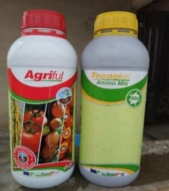
Figure 1. Front view Agriful (AgriTecno) (L) and AMINO (AgriTecno) (R).
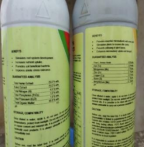
Figure 2. Front view Agriful (AgriTecno) (L) and AMINO (AgriTecno) (R).
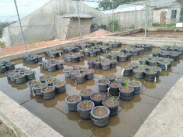
Figure 3. Nursery setup.
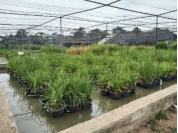
Figure 4. Before application of micro nutrients.
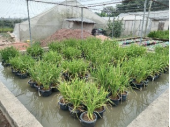
Figure 5. After the application of micronutrients.
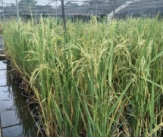
Figure 6. Flowering of the pot experiment.



 Share This Article
 Twitter
 Linked In
 Facebook
 Copy
Copy Download